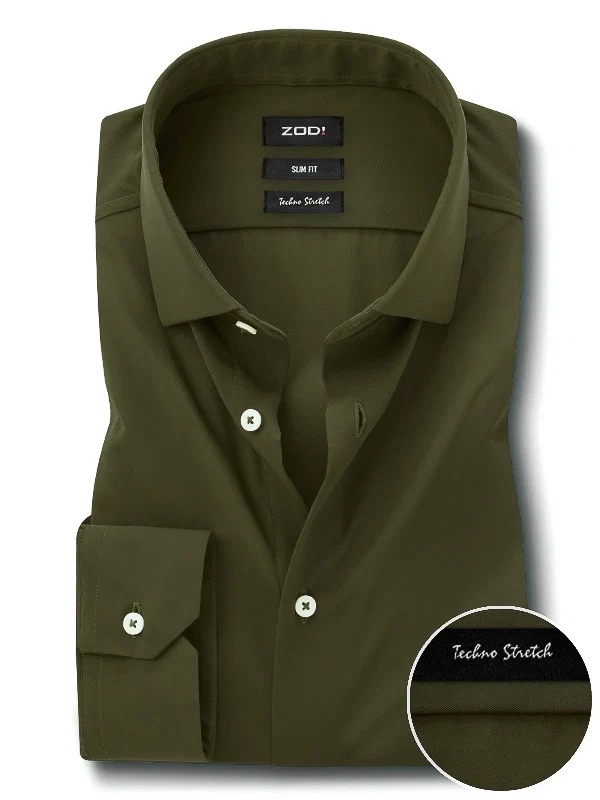
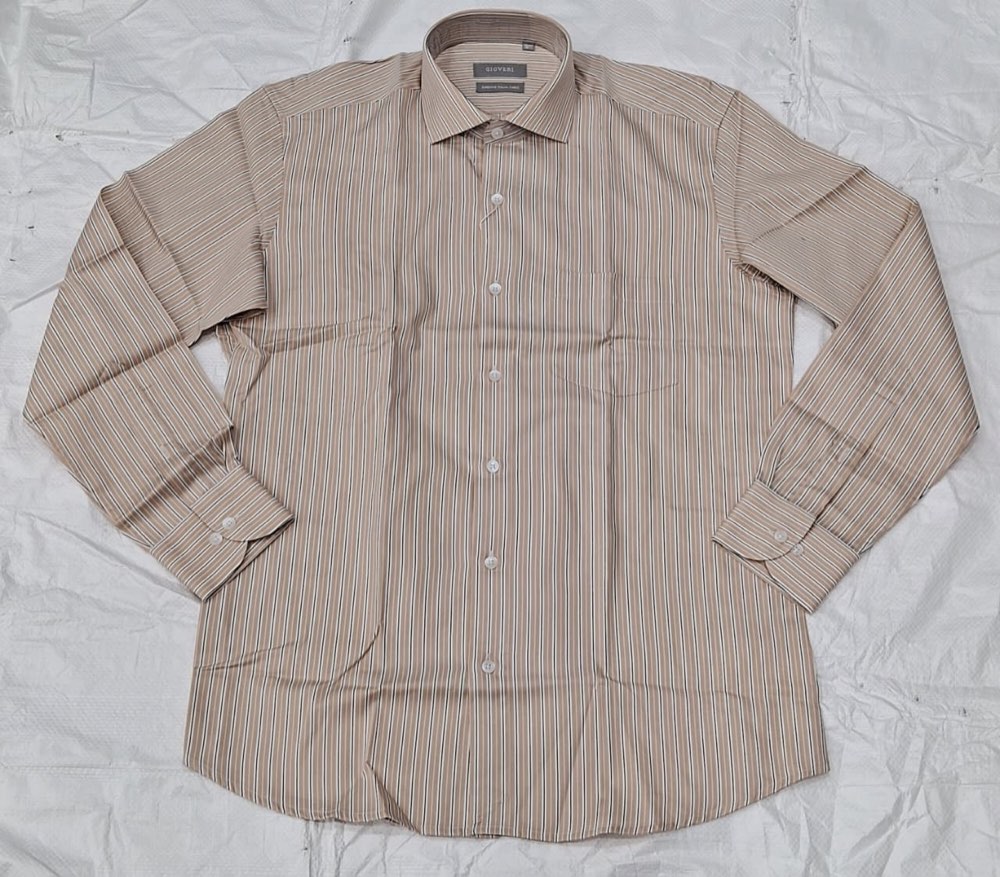
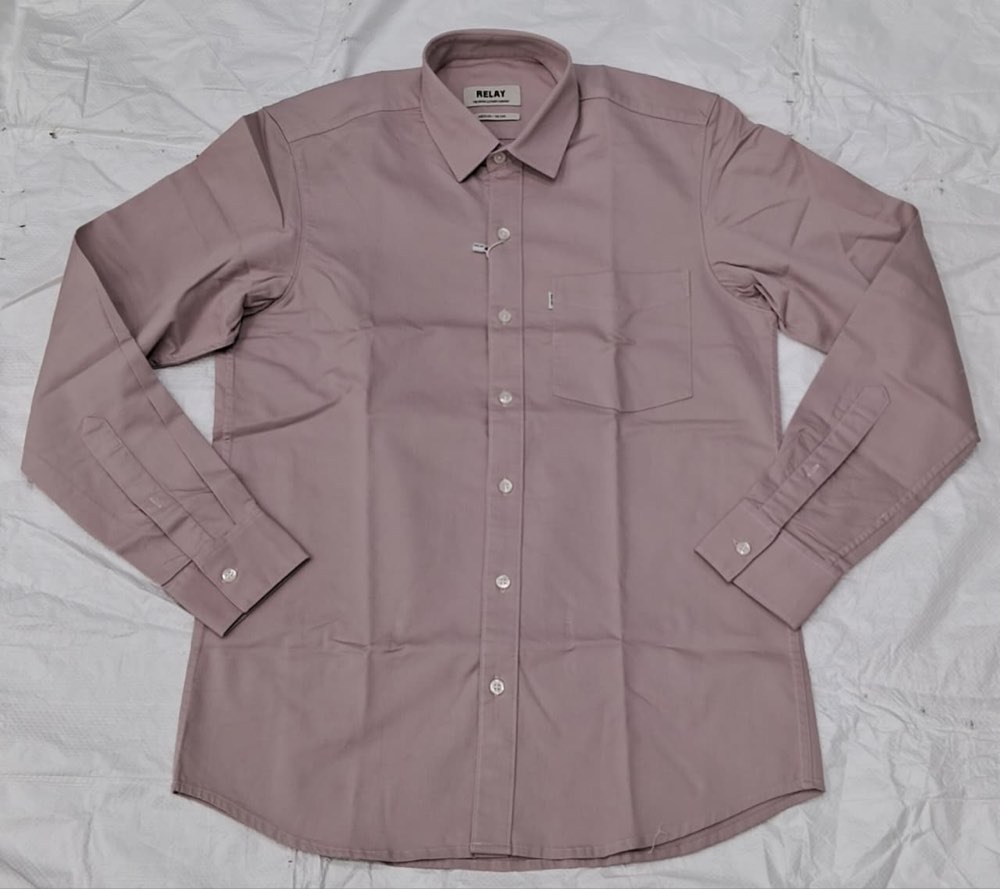
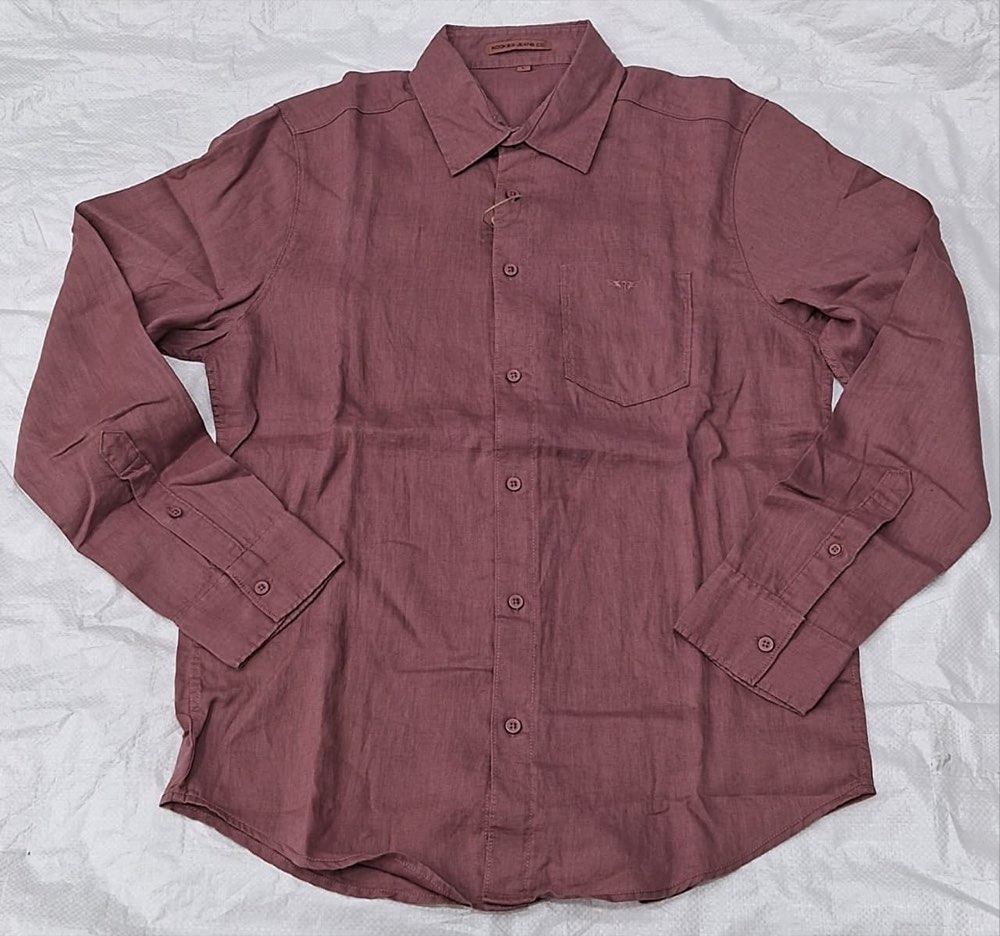
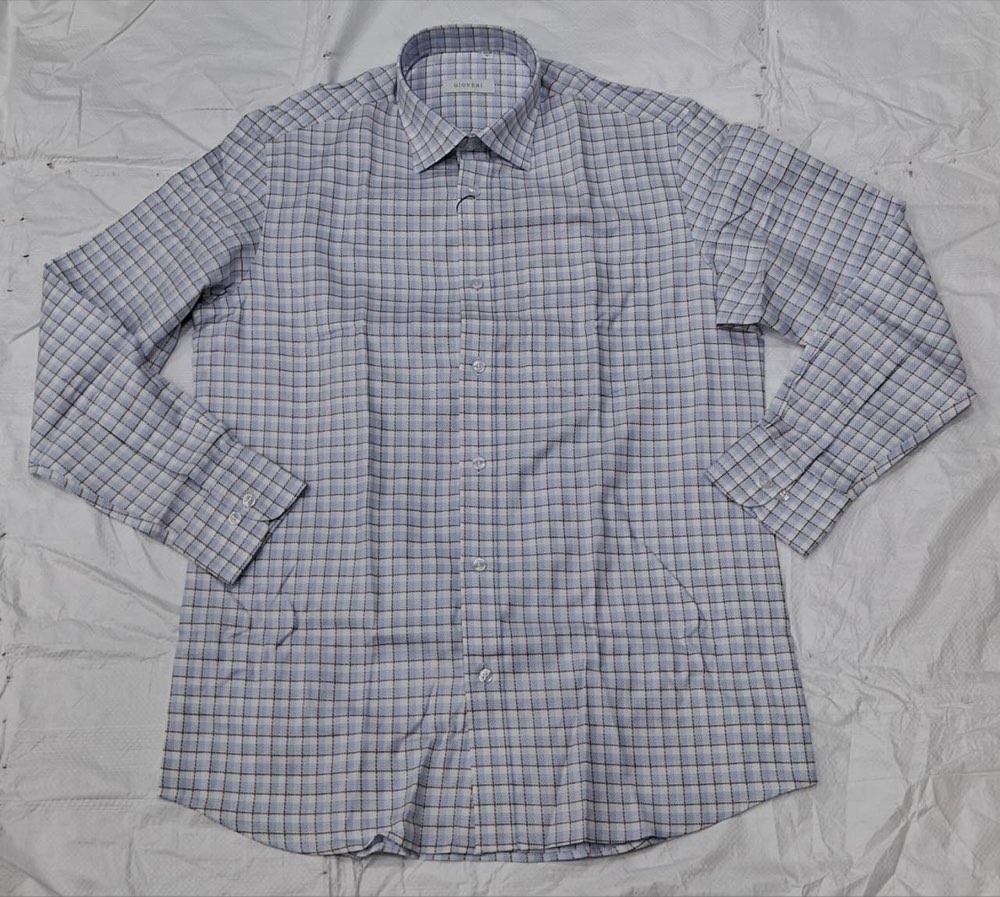
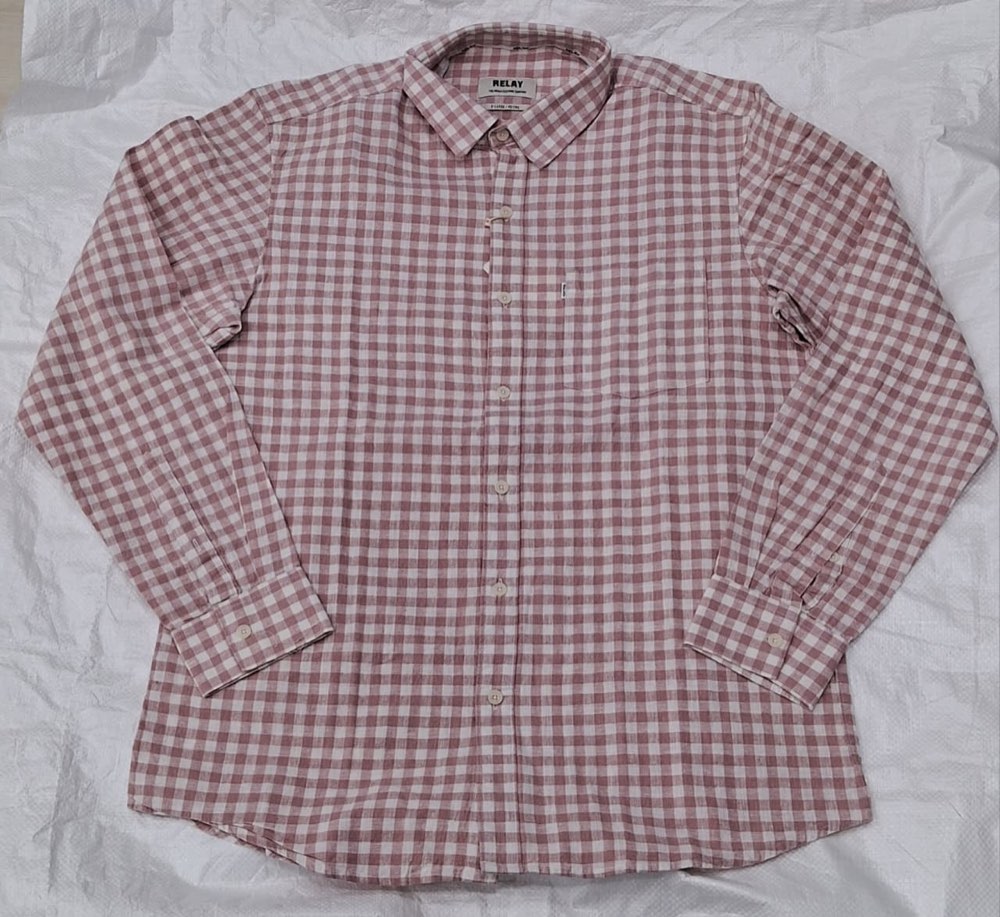
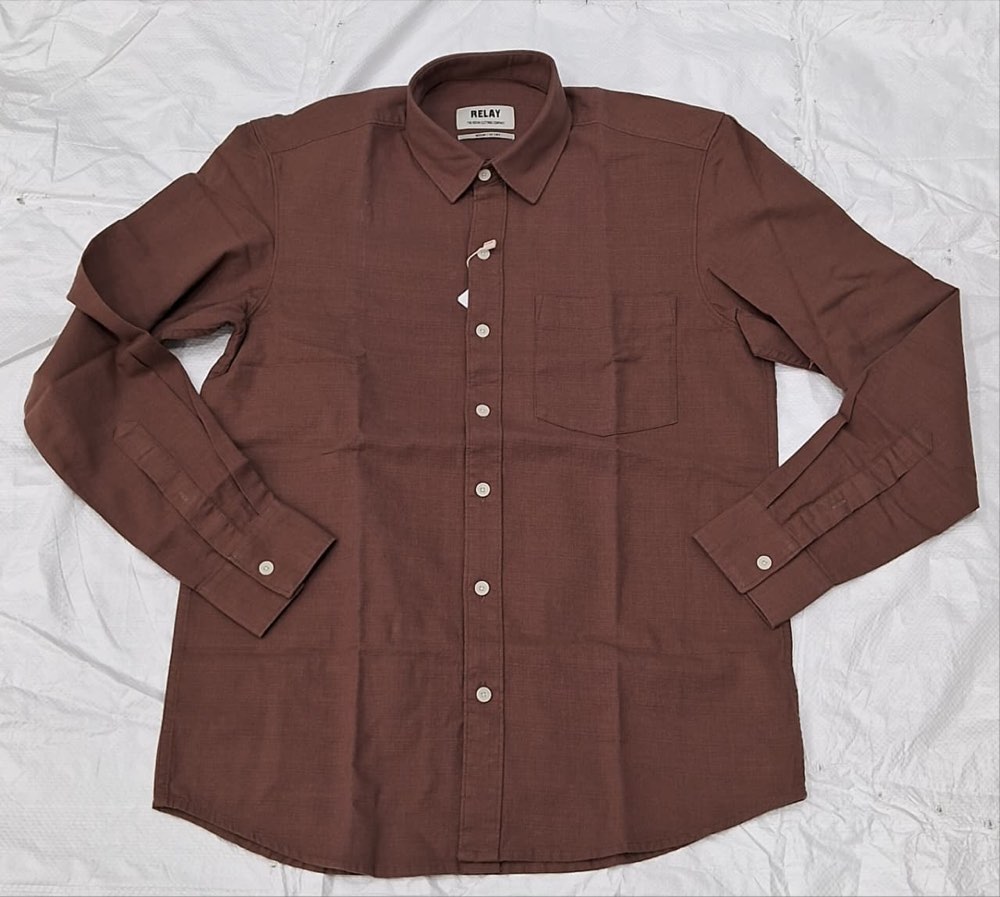
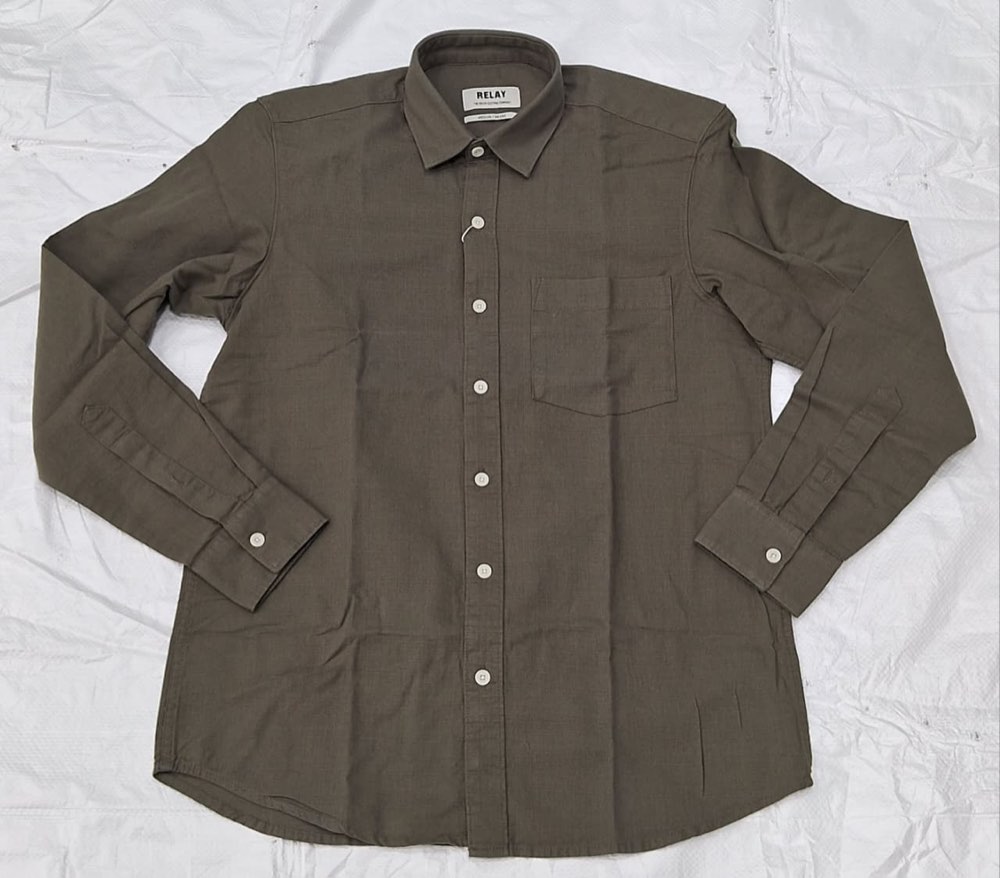
A shirt is only as good as the cloth it is cut from. Fibre, yarn, weave and weight decide whether it breathes on a humid afternoon, holds a crease-free line through a meeting, or softens beautifully over years of wear. This laboratory examines those properties one specimen at a time — in plain language, and without invented specifications.
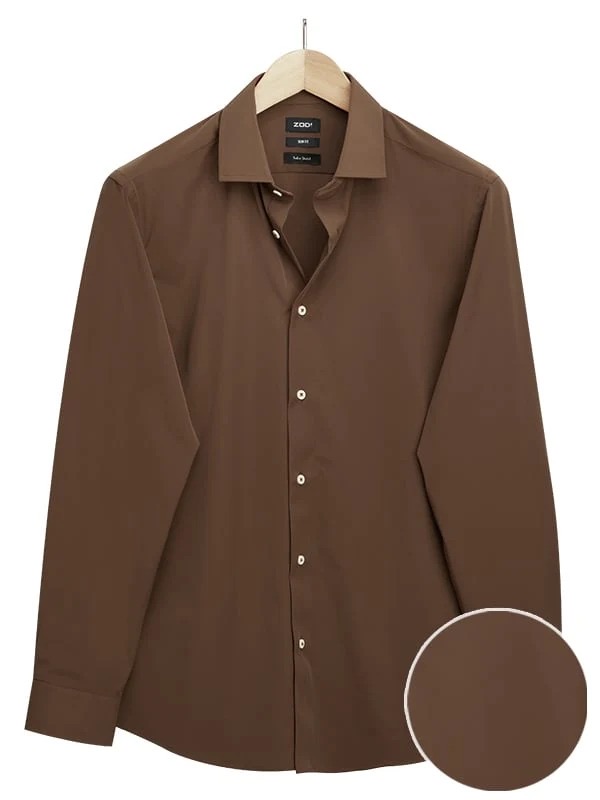
Each reading below compares typical characteristics of the cloth family on a five-step scale. Individual shirts vary with yarn quality, finish and blend — treat these as a guide to what to look and feel for, not as a specification of any particular garment. The loupe shows a magnified view of the photographed shirt.
SpecimenF-01
Cotton shirting
Cotton is the reference fibre for formal shirts. It is soft against the skin, absorbs moisture, lets air pass through and takes colour beautifully. Longer, finer cotton fibres spin into smoother yarns, which is why good cotton shirts feel silky and resist pilling.
The trade-off is creasing: pure cotton wrinkles more readily than blends and benefits from proper ironing. For most formal wardrobes — and especially in a warm city — it remains the first choice.
Comfort
Breathability
Formality
Durability
Crease resistance
Mumbai suitability
SpecimenF-02
Cotton blends
Blending cotton with other fibres changes its behaviour. A touch of elastane adds stretch and comfort in slimmer fits; polyester improves crease resistance and quick drying; linen adds texture and airiness; viscose or modal brings softness and drape.
Blends are practical for travel and long days. The higher the synthetic share, the less a fabric breathes — so in humid weather, check the label and favour cotton-rich blends.
Comfort
Breathability
Formality
Durability
Crease resistance
Mumbai suitability
SpecimenF-03
Oxford cloth
Oxford uses a basket weave — pairs of threads crossing pairs — that gives a soft, slightly nubbly surface, often with a subtle two-tone effect. It is thicker and more robust than poplin and grows softer with every wash.
Its natural partner is the button-down collar. Oxford sits comfortably in business-casual offices; a finer version called pinpoint oxford is smoother and suitably formal for a tie.
Comfort
Breathability
Formality
Durability
Crease resistance
Mumbai suitability
SpecimenF-04
Poplin
Poplin (also called broadcloth) is a tight, simple over-under plain weave. The result is smooth, flat, light and crisp, with a faint sheen — the classic face of a business shirt.
It looks sharp under a suit and feels cool, but its smooth surface shows creases and benefits from a good press. Poplin is the safest cloth for white and pale-blue formal shirts.
Comfort
Breathability
Formality
Durability
Crease resistance
Mumbai suitability
SpecimenF-05
Twill
In a twill, each thread passes over more than one crossing thread, stepping along to create a fine diagonal rib. Twill is softer and drapes more fluidly than poplin, has a gentle lustre and hides creases well.
Variations include herringbone, where the diagonal reverses into a chevron. Twill is a superb choice for business shirts that need to look composed from morning to evening.
Comfort
Breathability
Formality
Durability
Crease resistance
Mumbai suitability
SpecimenF-06
Lightweight shirting
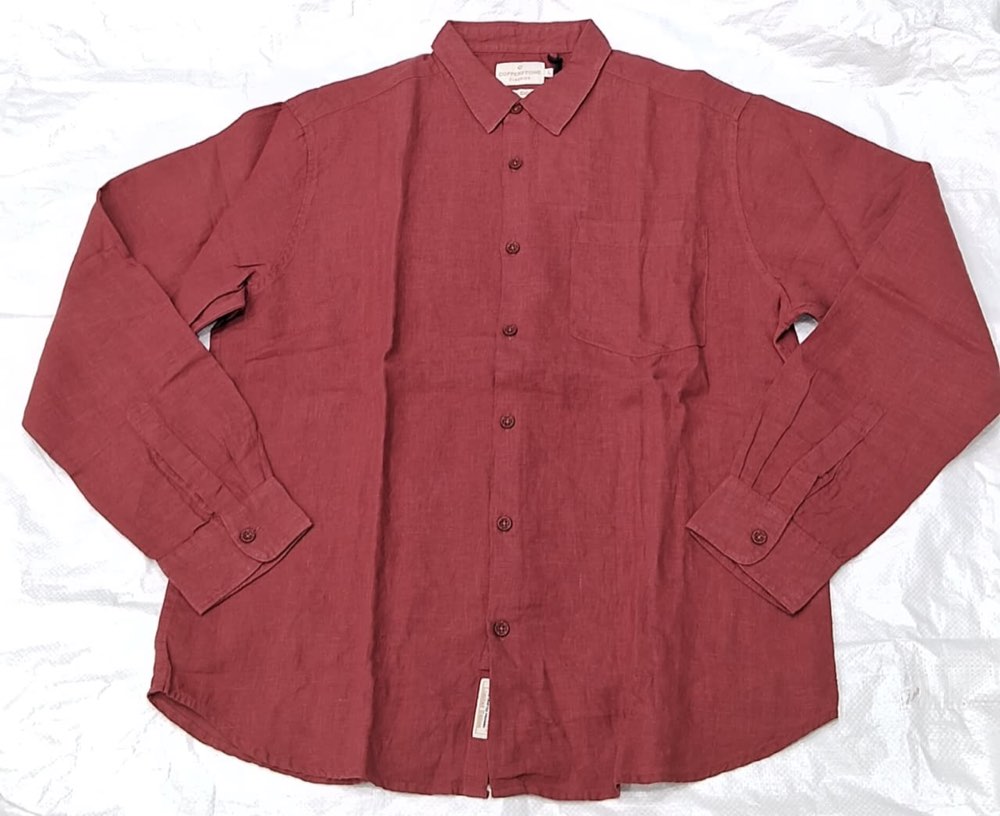
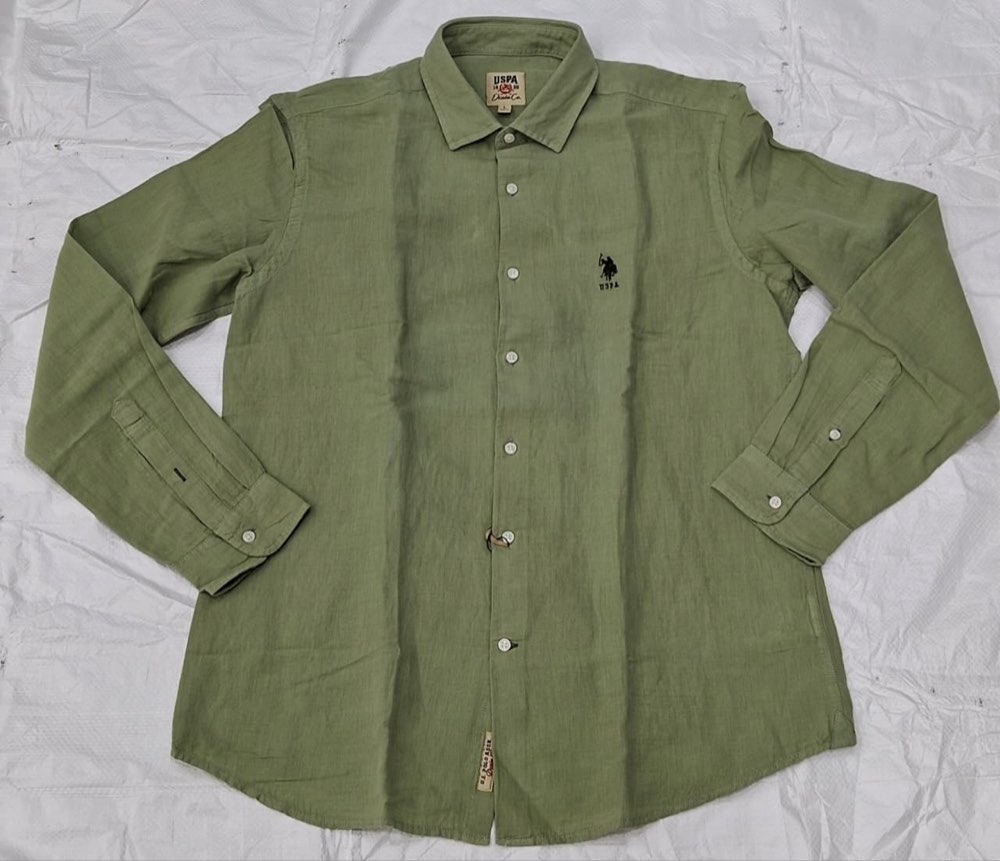
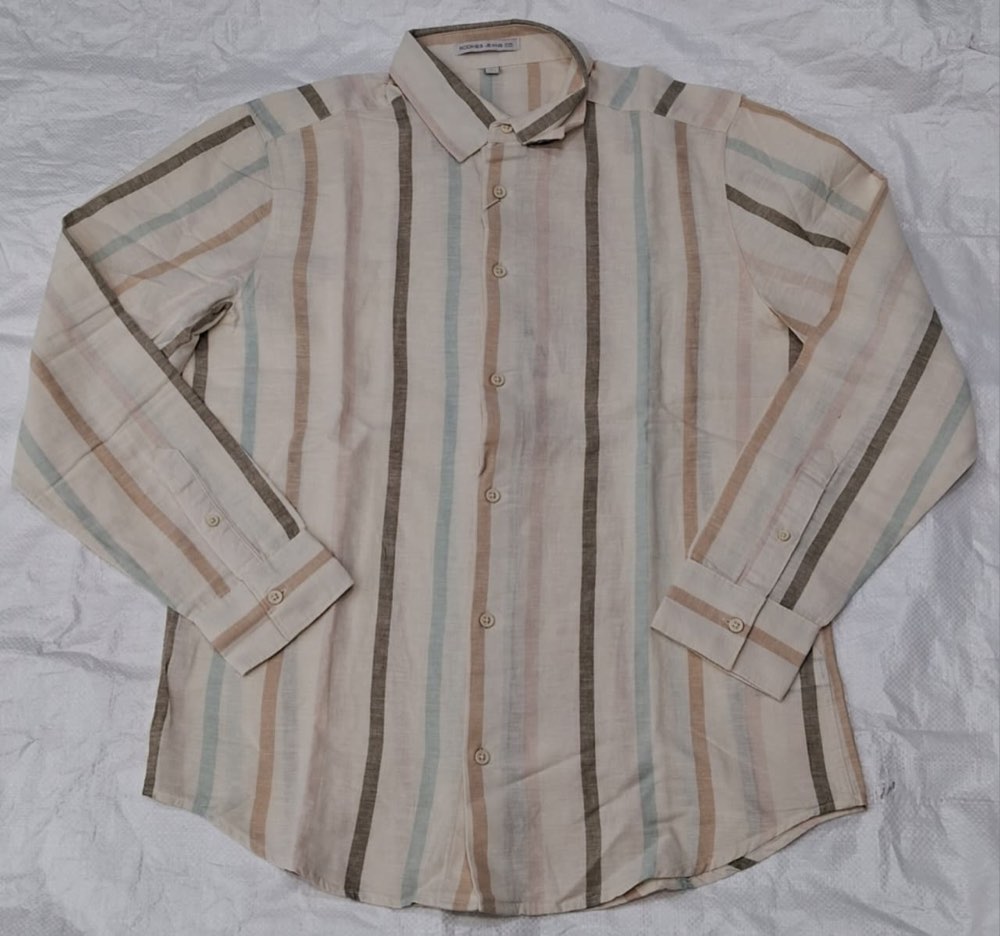
Voiles, fine end-on-ends, linen and linen-cotton blends and other open weaves let air circulate freely. They feel cool, dry quickly and are kind in heat and humidity.
Lighter cloths are more transparent and crease more easily, so choose colours and patterns with that in mind — and expect linen's relaxed wrinkle to be part of its charm rather than a fault.
Comfort
Breathability
Formality
Durability
Crease resistance
Mumbai suitability
B
Bay B · Properties P-07 to P-12
What the cloth actually does.
Six properties explain almost everything about how a shirt behaves on the body. Learn to notice them in the hand and you can judge any shirt in seconds.
P-07 · Fabric texture
Texture is formality you can feel.
Smooth, flat surfaces such as poplin read as the most formal; visible texture — oxford, dobby, herringbone, linen slub — relaxes a shirt. Fine textures are a useful middle ground: they look like a solid from across a room and reveal richness up close.
P-08 · Weave structures
Three weaves behind most shirts.
Plain · poplinTwill · diagonalBasket · oxford
A plain weave crosses threads one over, one under — crisp and light. A twill passes over two or more threads, stepping along to form a diagonal — soft and drapey. A basket weave crosses threads in pairs — textured and hard-wearing. Specialist weaves such as dobby and jacquard add small woven patterns on top of these structures.
P-09 · Breathability
Air, moisture and you.
Breathability depends on the fibre (natural fibres absorb and release moisture), the yarn and the openness of the weave. Hold a shirt up to the light: if you can see a little light through the weave, air can move through it too.
P-10 · Fabric weight
Heft decides the season.
LightVoile, fine poplin, linen. Cool and airy; may be sheer.
MediumMost business poplins and twills. All-year formal.
HeavierOxford, flannel, brushed cloth. Structured and warm.
P-11 · Drape & movement
How the cloth falls.
Drape is how a fabric hangs and moves. Twills and blends with viscose flow over the body; crisp poplins hold away from it. Good drape keeps a shirt from billowing when tucked and lets it move with you rather than against you.
P-12 · Wrinkle resistance
Looking as good at six as at nine.
Twill weaves, blends with polyester and fabrics with easy-care finishes recover from creasing better than plain cottons and linen. The trade-off is usually some loss of breathability or natural feel.
Quick test: squeeze a corner of the shirt in your fist for five seconds, release, and see how quickly the creases relax.
≈
Matrix · Side by side
Detailed fabric comparison.
How the main shirting cloths typically compare. Use it as a starting point, then trust your hands.
Comparison of shirting fabrics by comfort, appearance, formality, durability, breathability and climate suitability
Cloth
Comfort
Appearance
Formality
Durability
Breathability
Mumbai climate
Cotton poplin
Cool, smooth
Crisp, flat, slight sheen
Very high
Good
High
Excellent most of the year
Twill
Soft, supple
Diagonal rib, gentle lustre
High
Very good
Medium
Good; best in cooler months
Oxford
Soft, substantial
Textured, relaxed
Medium
Excellent
Medium
Comfortable in air-conditioned offices
Fine textures (dobby)
Pleasant
Subtle woven pattern
Medium-high
Good
Medium-high
Good
Cotton blends
Varies; stretch adds ease
Smooth, holds shape
High
Very good
Lower as synthetics rise
Choose cotton-rich blends
Linen & linen blends
Very cool
Textured, naturally creased
Low-medium
Good
Very high
Excellent in heat; casual offices
General characteristics of cloth types, not specifications of individual garments. Composition and finish vary from shirt to shirt.
Field notes · Mumbai
Shirting for a coastal city.
Mumbai's working day often moves between humid streets and chilled offices. The best shirt for the city breathes outdoors, looks composed indoors and doesn't collapse in between.
Hot months
Lightweight cotton, fine poplin and linen blends in pale colours. Avoid heavy oxfords and high-synthetic blends that trap heat.
Monsoon
Quick-drying, crease-tolerant cloths — twills and cotton-rich blends. Darker and patterned shirts hide splashes; carry a spare for long days.
Cooler months
The best time for twills, oxfords and richer textures, and for layering under a jacket.
Air-conditioned offices
A medium-weight cotton or twill balances the walk in with the hours at a desk — not so light it feels flimsy, not so heavy it stifles outdoors.
C
Bay C · Protocol P-13
Fabric care, as a protocol.
Care decides how long a good shirt stays good. Always follow the care label first; these general steps suit most cotton formal shirts.
Store on a shaped hanger, top button fastened
Read the label
Fibre content and care symbols tell you the safe temperature, whether to tumble dry and how hot to iron.
Prepare
Remove collar stays, unbutton every button including cuffs and collar points, and treat collar and cuff marks gently before washing.
Wash cool to warm
Wash with similar colours on a gentle cycle. Cooler water protects colour and reduces shrinkage; turn darker shirts inside out.
Dry with care
Shake out and hang to dry on a hanger, out of harsh direct sun for coloured shirts. Avoid high-heat tumble drying, which stresses fibres and fused collars.
Iron while slightly damp
Collar first (underside, then top), then cuffs, sleeves, yoke, back and fronts. Iron around buttons, never over them.
Hang, don't crowd
Use shaped hangers and leave space between shirts so they don't crush. Fasten the top button to keep the collar in shape.
Rotate
Rest shirts between wears. In the monsoon, make sure shirts are completely dry before storing to avoid mildew.