+91 83693 81345
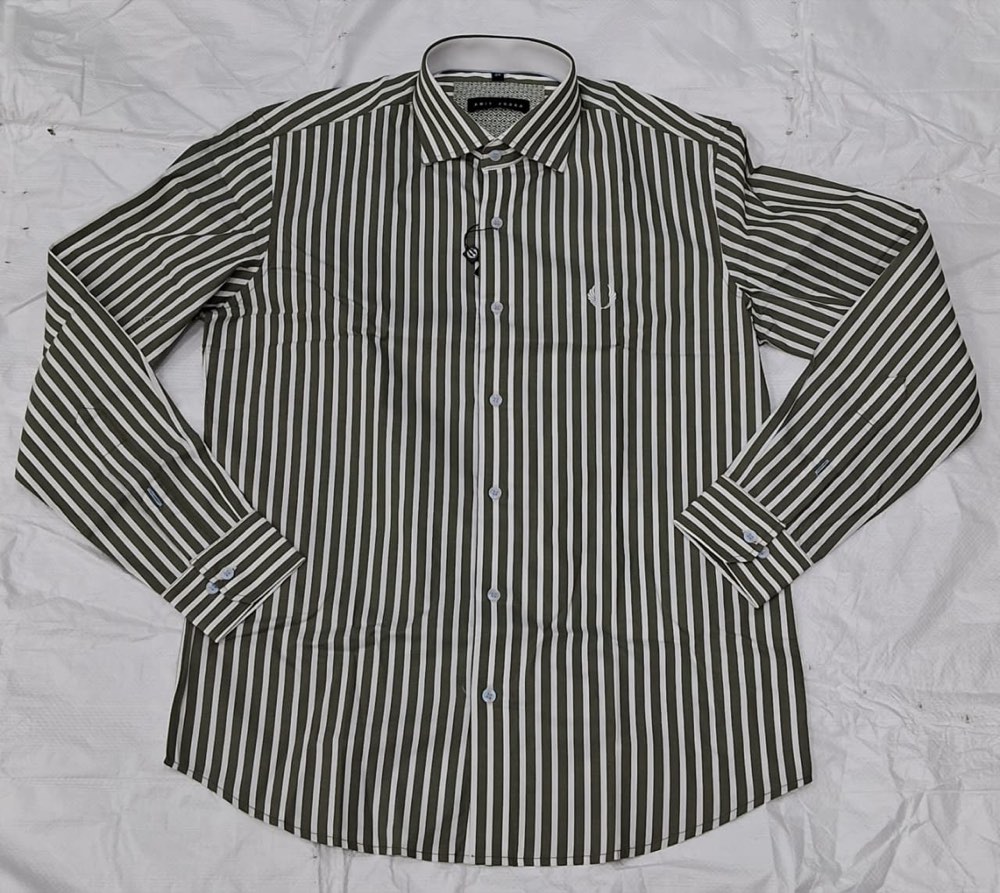
Green and white striped long-sleeve formal shirt laid flat
№ 01 — A striped formal shirt, read part by part

01 Foundations

The Complete Guide to Men's Formal Shirts

A formal shirt looks simple, but it is one of the most carefully engineered garments a man owns. Understanding its parts makes every future choice easier.

Start with the definition. A formal shirt is a long-sleeve, button-front shirt with a structured collar, cuffs that fasten at the wrist and a hem long enough to stay tucked. It is designed to be worn with tailored trousers, often under a jacket and frequently with a tie. Everything else — colour, pattern, cloth — is variation on that template.

The anatomy

The collar frames the face and holds the tie. The yoke across the upper back carries the weight of the shirt from the shoulders. The placket runs down the front and carries the buttons. The sleeves end in cuffs, and the curved shirt-tail hem keeps everything tucked. When these parts are proportioned well, a shirt looks calm and composed; when one is wrong, the whole outfit feels slightly off.

The three decisions

  • Fit — slim, regular, classic or contemporary, chosen for your build.
  • Collar — classic, semi-spread, spread, point, cutaway or button-down, chosen for your face and whether you wear a tie.
  • Cloth — poplin, twill, oxford or lighter weaves, chosen for climate and formality.
Practical example

For a first serious formal shirt, choose white or pale blue cotton poplin, a semi-spread collar and single-button cuffs, in the fit that suits your shoulders. It will work with every suit and every pair of formal trousers you own.

Styling recommendations

Build outward from the shirt. Solid shirts accept patterned ties; patterned shirts prefer solid ties. Lighter shirts under darker suits give the most contrast and the most formal effect. And whatever you choose, iron the collar and cuffs carefully — they are what people see.

Everything else — colour, pattern, cloth — is variation on a single template.
02 Office

How to Choose Formal Shirts for Office Wear

Office shirts work hardest of all: worn often, washed often and seen by the same people every day. Choose them for reliability first and personality second.

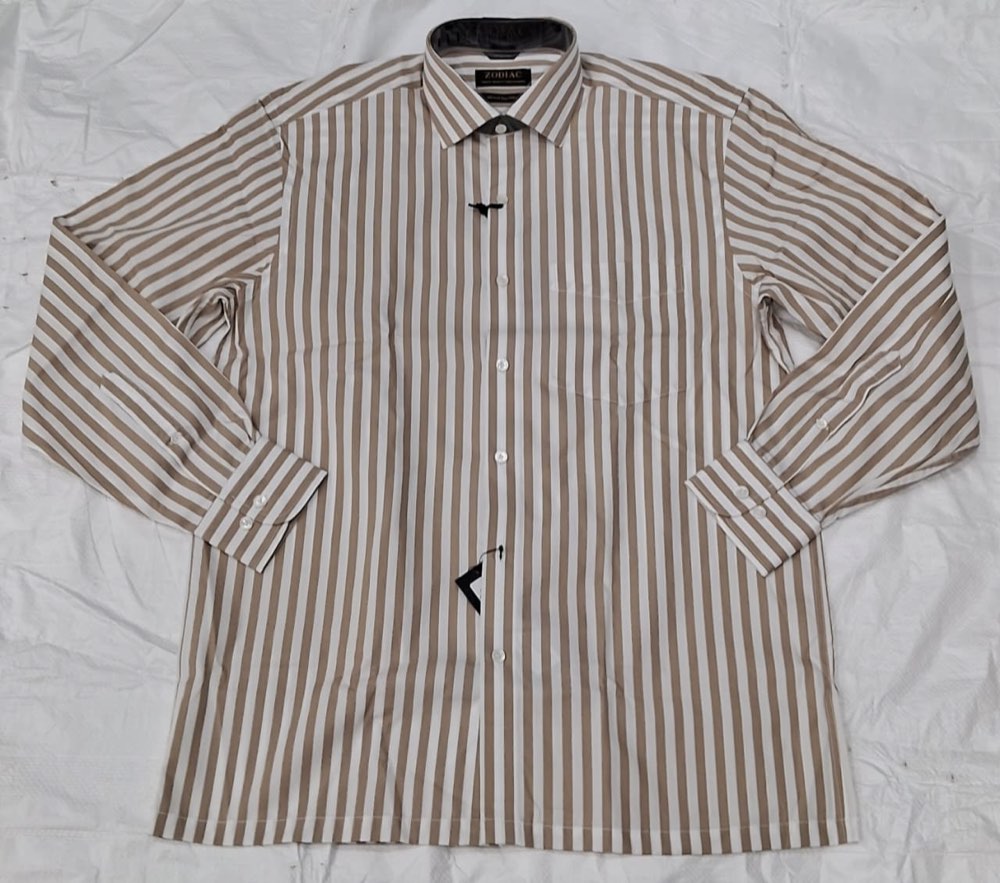
White long-sleeve shirt with black stripes laid flat
№ 02 — Stripes add variety to the office week

Begin with your workplace. A traditional corporate office, a bank or a law firm calls for crisp solids and fine stripes worn with a tie. A modern office in Andheri's commercial districts may welcome softer collars, textured cloths and the occasional open neck. Dress for the most formal meeting you are likely to have that day.

The core palette

  • White and pale blue solids — the foundation.
  • Fine stripes in blue, grey or navy on white.
  • Small checks and micro-patterns that read as solids from a distance.
  • One or two quieter colours — sage, lilac, ecru — for variety.

Fabric for daily wear

Cotton poplin and twill are the workhorses. Twill hides creases through long days; cotton-rich blends make ironing easier. For hot commutes, keep at least a few lighter-weight shirts in rotation.

Practical example

A five-day rotation might be: Monday white, Tuesday blue stripe, Wednesday pale blue, Thursday fine check, Friday a softer colour with a button-down collar for a less formal end to the week.

Styling recommendations

Keep collars firm enough to stand under a jacket. Choose fits that let you sit and reach comfortably at a desk. Avoid loud prints, short sleeves with a tie and casual details such as twin flap pockets. And own enough shirts that each can rest between wears — they will last longer and look better.

Dress for the most formal meeting you are likely to have that day.

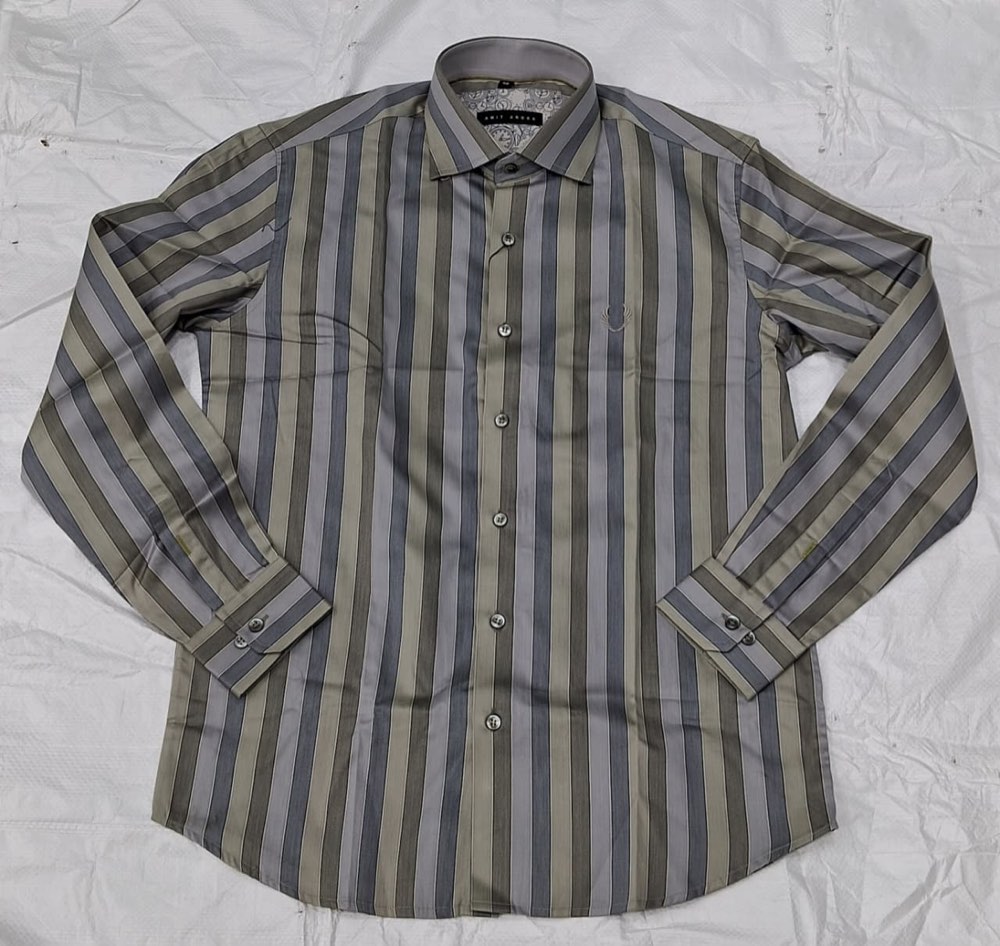
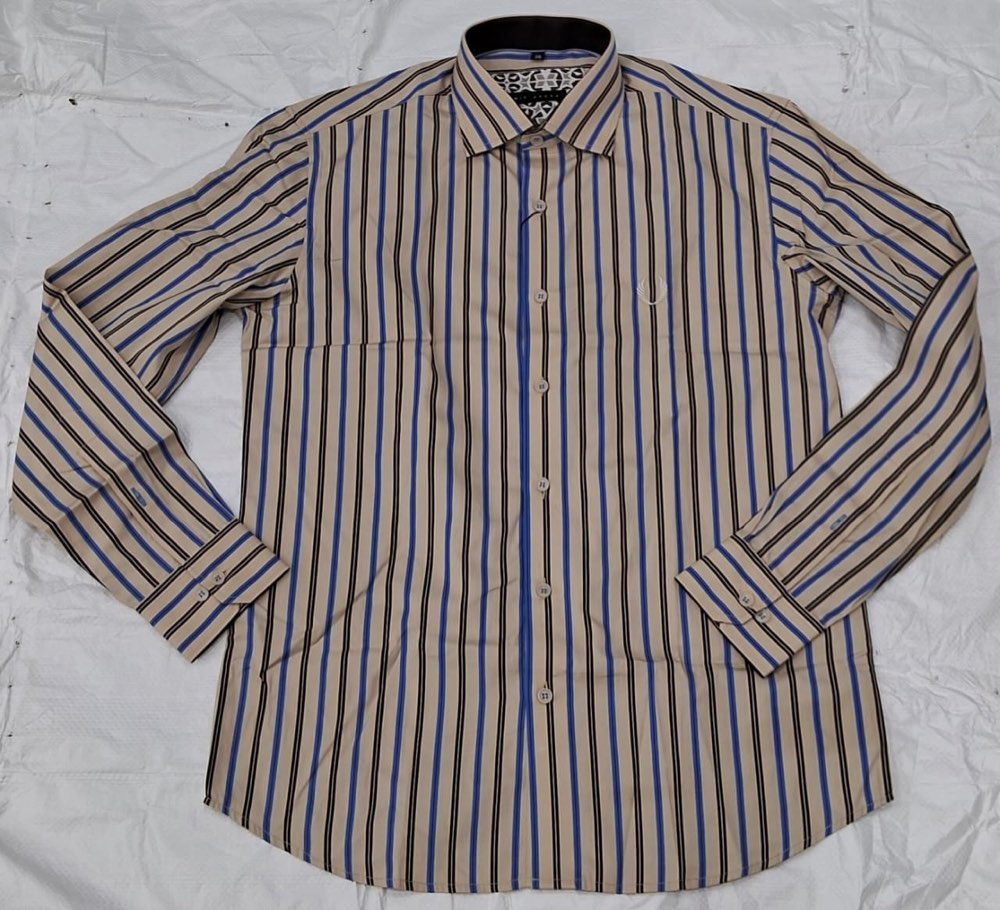
Long-sleeve shirt with olive, grey and blue stripes laid flat
№ 03 — The cut matters more than the colour

03 Fit

Slim Fit vs Regular Fit Shirts

Neither cut is better. Each is right for a different body, a different job and a different day — and knowing which is which saves a great deal of disappointment in the mirror.

A slim fit shirt is shaped closer to the body. It tapers from chest to waist, has higher armholes and narrower sleeves, and removes the excess fabric that can billow above a belt. A regular fit runs in a straighter line, with more room through the chest, waist and arms.

Who each suits

  • Slim fit suits lean and athletic builds, men who wear fitted suits, and anyone who dislikes fabric gathering at the waist.
  • Regular fit suits broader chests and midsections, men who move a lot during the day, and those who prioritise airflow in warm weather.

The common mistakes

The most frequent error is choosing a slim fit one size too small. Look for horizontal pulls at the buttons and strain across the back when you reach forward. The opposite mistake is a regular fit one size too large: shoulder seams drooping down the arm, sleeves too long, and fabric folding over the belt.

Practical example

Try the same shirt in both cuts. Tuck each in, sit down, fold your arms and reach forward. The right fit is the one that stays smooth through all four movements without pulling or ballooning.

Styling recommendations

Match the shirt to the rest of the outfit's proportions. Slim shirts belong with slimmer trousers and fitted jackets; regular shirts sit better with classic straight trousers and more relaxed tailoring. Contemporary fits split the difference and are worth trying if neither feels quite right.

Fit the person, not the label.

04 Details

Understanding Different Shirt Collars

The collar is the most visible part of a shirt and the frame for your face. Choosing it well is the fastest way to look more put together.

Collars differ in three ways: how far apart the points sit (the spread), how long the points are, and how tall the band is. Those three measurements decide how formal the collar looks, which tie knots suit it and how it behaves when worn open.

The six to know

  • Classic — medium points, medium spread. The everyday default.
  • Point — long points close together. Traditional and best with a slim knot.
  • Semi-spread — the versatile middle ground, good with or without a tie.
  • Spread — points set wide; suits fuller knots and formal suits.
  • Cutaway — points swept almost horizontal; a confident fashion statement.
  • Button-down — points buttoned to the shirt; relaxed and ideal for business-casual.

Collar and face

As a general guide, wider collars balance longer and narrower faces, while point collars lengthen rounder faces. Proportion matters too: a broad-shouldered man can carry a larger collar, while a slighter frame looks best in moderate proportions.

Practical example

If you want one collar for everything — meetings with a tie and evenings without — choose a semi-spread. It holds its shape open and frames a four-in-hand or half-Windsor knot equally well.

Styling recommendations

Match knot size to spread: slim knots for point collars, fuller knots for spread and cutaway. Keep collars clean and pressed, remove stays before washing, and never wear a button-down unbuttoned at the points.

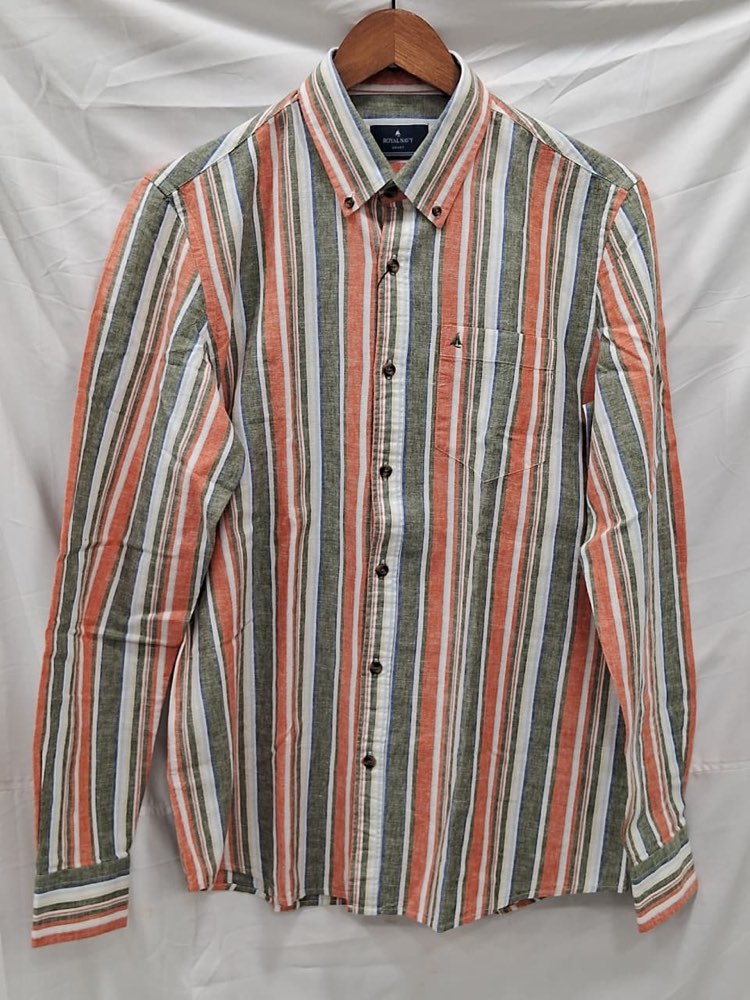
Orange, green and white striped long-sleeve shirt on a wooden hanger with its collar clearly visible
№ 04 — A collar seen as it stands

The collar is the frame; the face is the portrait.

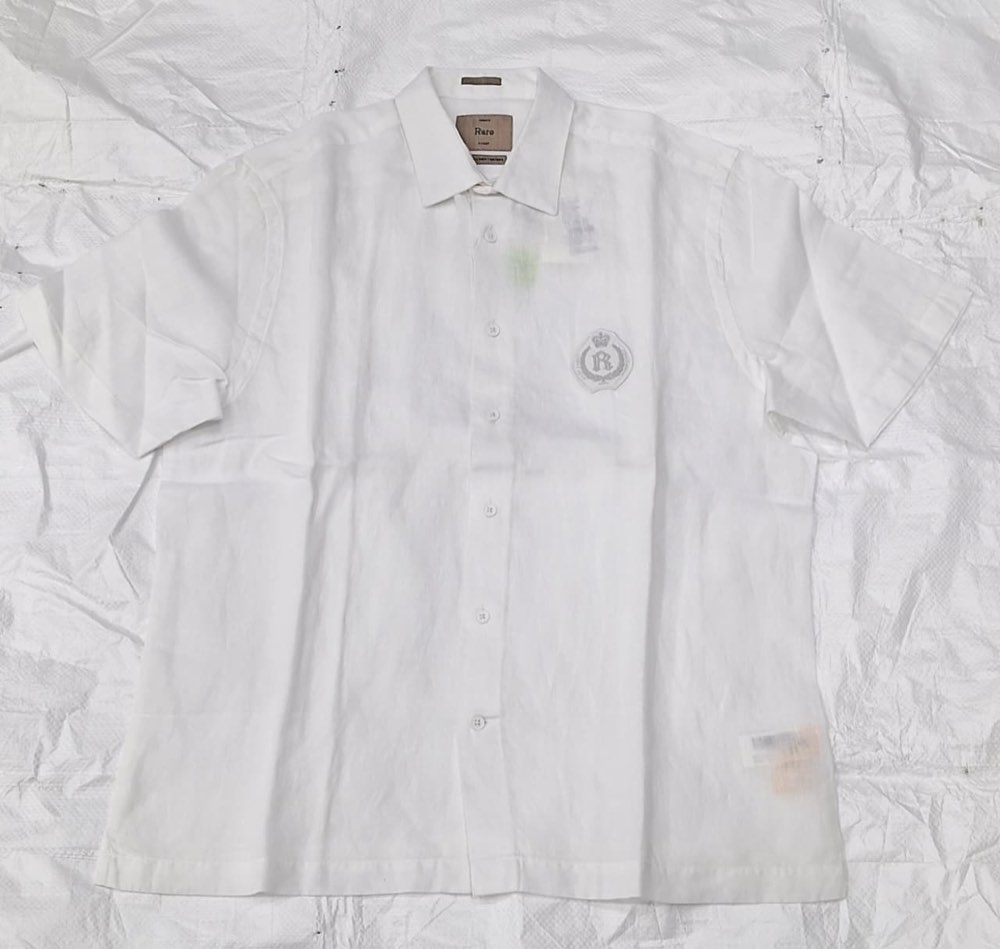
White half-sleeve shirt with a small embroidered emblem laid flat
№ 05 — White, in its simplest form

05 Colour

Why White Formal Shirts Remain Timeless

Trends come and go around it, but the white shirt stays. It is the most formal, most versatile and most honest shirt a man can wear.

White works because it does nothing to compete. It brightens the face, sharpens every suit colour and sets off any tie. It is equally correct at an interview, a board meeting, a wedding reception or a formal dinner — which is why it is the one shirt worth owning more than one of.

What white reveals

White hides nothing. A poorly fitted shoulder, a limp collar or a slightly transparent cloth is obvious in white in a way it would not be in a pattern. That makes white the best test of a shirt's quality — and the shirt where fit and fabric deserve the most care.

Choosing a white shirt

  • Poplin for crisp formality; twill for softer sheen; oxford for a relaxed weekday white.
  • A weight substantial enough not to be see-through.
  • A spread or classic collar for formal wear; French cuffs for ceremonies.
Practical example

For a wedding reception, a white spread-collar shirt with French cuffs under a navy or charcoal suit is impossible to fault. For the office, the same white in a semi-spread collar with barrel cuffs is just as correct.

Keeping white white

Wash whites separately, treat collar and cuff marks early, dry away from harsh sun and rotate several shirts so none is overworked. A white shirt cared for properly stays bright for a long time.

White hides nothing — which is exactly why it impresses.

06 Colour

How to Style Blue Formal Shirts

If white is the most formal shirt, blue is the most useful. It flatters nearly everyone and pairs with almost everything — provided you know which blue to reach for.

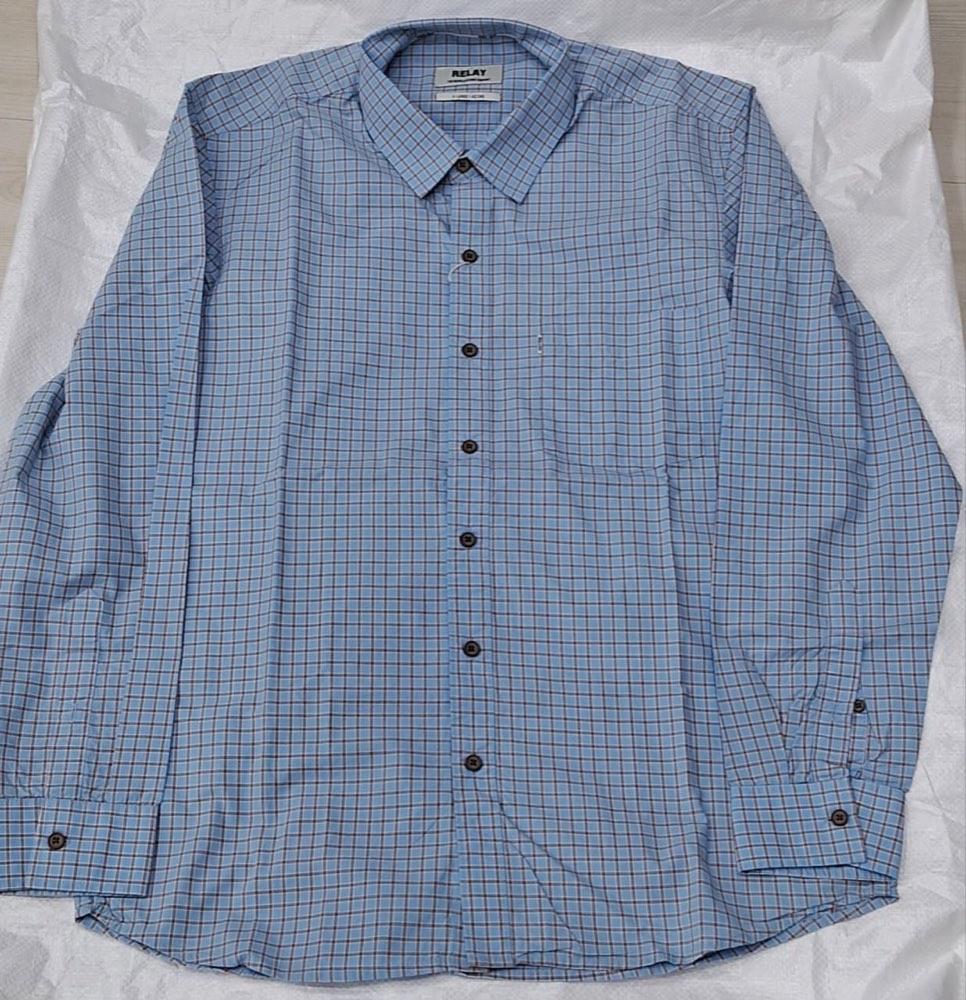
Light blue micro-check long-sleeve shirt laid flat
№ 06 — Pale blue, the working classic

Blue shirts span a wide range: pale sky, mid-blue, chambray tones, blue stripes and checks. Lighter blues are the most formal and the easiest to wear; deeper blues and chambrays are more relaxed and better without a tie.

With suits

  • Navy suit + pale blue shirt — tonal, calm and very polished.
  • Charcoal suit + blue shirt — crisp contrast for formal business.
  • Grey or beige suit + mid-blue shirt — lighter, warmer and good for daytime.

With trousers alone

Blue shirts work with grey, navy, charcoal, beige and olive trousers. Brown leather shoes and belts warm the look; black keeps it sharper and more formal.

Ties on blue

Navy, burgundy, deep green and brown ties all sit well. A navy tie on a pale blue shirt is quietly elegant; burgundy adds warmth and authority.

Practical example

For a client presentation, try a pale blue shirt, navy suit and burgundy tie. For a Friday, swap to a mid-blue button-down with beige chinos and no tie.

Styling recommendations

Watch for sweat marks on mid-blues in heat — lighter blues and patterns disguise them better. And avoid matching shirt and suit in exactly the same blue; a step lighter or darker keeps the outfit crisp.

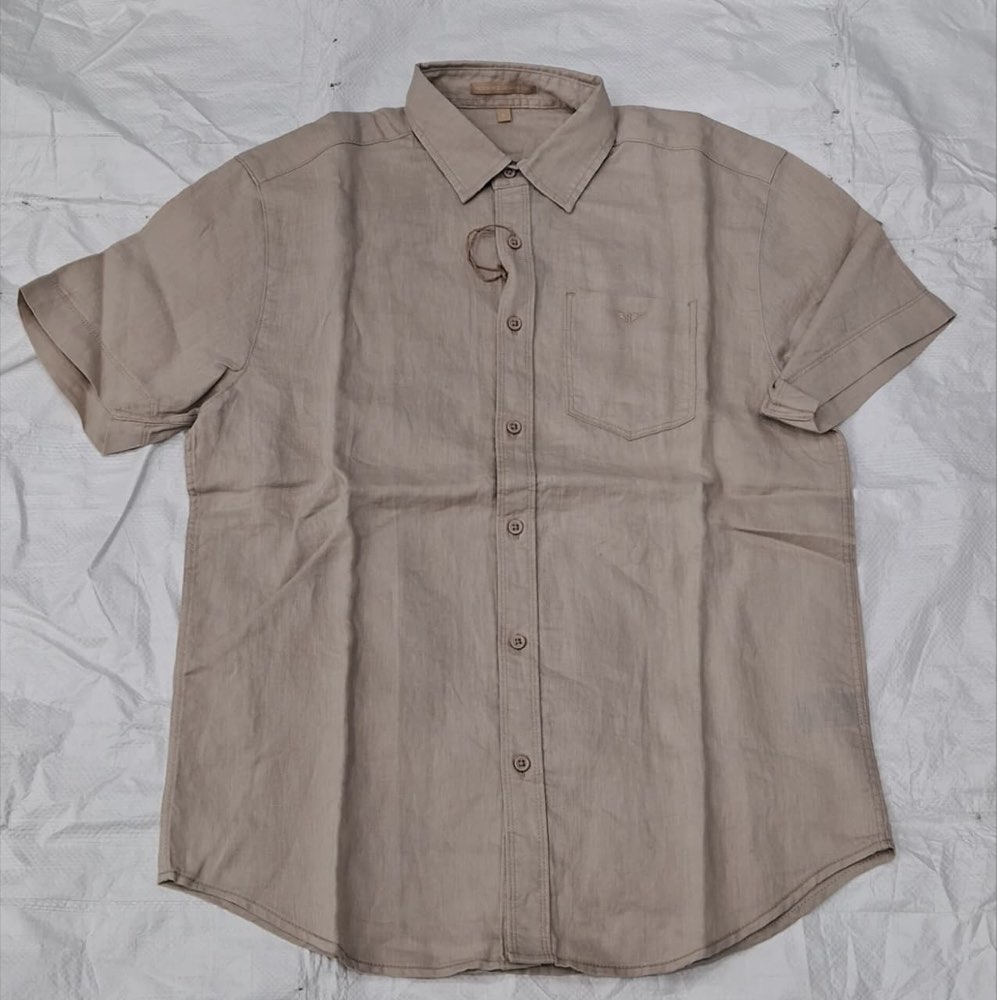
Beige half-sleeve shirt in a light, textured weave laid flat
№ 07 — Lighter cloths for a coastal city

07 Climate

Choosing Shirts for Mumbai's Climate

Mumbai asks a lot of a shirt: heat and humidity outdoors, cold air-conditioning indoors, and monsoon rain for months of the year. The right choices keep you comfortable and composed through all of it.

Comfort in warm, humid weather comes down to breathability — how freely air and moisture pass through the cloth. Natural fibres such as cotton and linen absorb moisture and release it; open, lighter weaves let air circulate. Dense or high-synthetic fabrics tend to trap heat against the skin.

What to look for

  • Cotton or cotton-rich fabrics in light to medium weights.
  • Poplin and fine end-on-end weaves for formal days; linen blends for relaxed ones.
  • Lighter colours, which reflect heat, and patterns, which disguise creases.
  • A regular or contemporary fit that allows air to move.

Through the seasons

In the hottest months, prioritise the lightest breathable cottons and linen blends. In the monsoon, quick-drying, crease-tolerant twills and blends make sense, and darker patterns hide splashes. The cooler months are the time for richer textures and heavier oxfords.

Practical example

For a day that runs from a humid commute to a chilled conference room, a medium-weight cotton twill in pale blue is ideal: breathable outdoors, substantial enough indoors, and forgiving of creases at both ends of the day.

Styling recommendations

Carry a spare shirt on long days. Let shirts dry completely before storing during the monsoon. And remember that a long sleeve in a light cloth often feels cooler in direct sun than bare arms.

Breathable outdoors, composed indoors — that is the Mumbai brief.

08 Styling

How to Match Formal Shirts with Trousers

The shirt-and-trouser pairing is the backbone of everyday formal dressing. A few principles make the combinations almost automatic.

The guiding idea is contrast. A lighter shirt with darker trousers is the classic formal arrangement: it draws the eye up toward the face and gives the outfit a clear structure. Tonal pairings — similar shades — look more relaxed and contemporary.

Dependable pairings

  • Navy trousers — white, pale blue, pink, lilac or fine stripes.
  • Charcoal and grey — almost any shirt: white, blue, lavender, checks.
  • Black — white or pale grey for formal evenings; avoid black-on-black at work.
  • Beige and khaki — blue, white, sage, navy stripes.
  • Olive — white, ecru, pale blue and soft checks.

Patterns

Patterned shirts look best with plain trousers. If the trousers carry a texture or subtle check, choose a solid shirt so the two don't compete.

Practical example

A pale pink shirt with charcoal trousers and black shoes is formal and fresh. Swap the trousers for beige and the shoes for brown, and the same shirt becomes a relaxed Friday outfit.

Styling recommendations

Match your belt to your shoes. Keep trouser hems neat and lengths consistent. And remember proportion: slim shirts with slimmer trousers, fuller shirts with classic straight trousers.

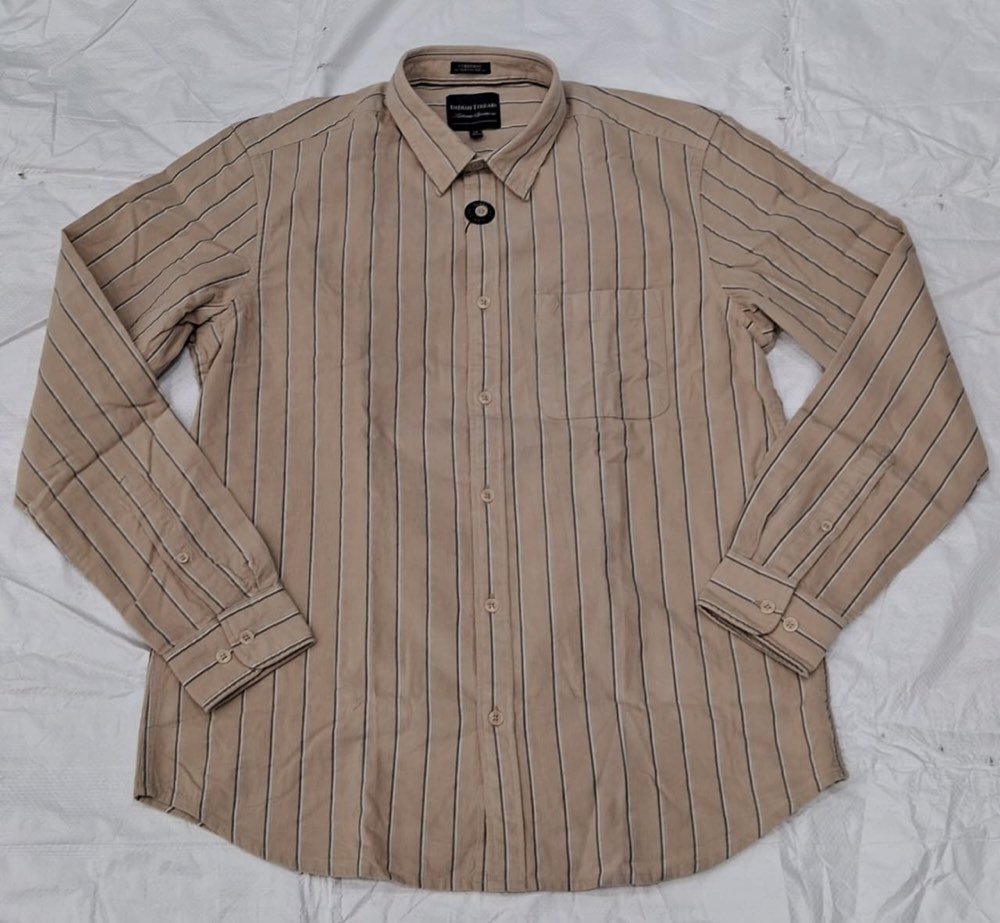
Beige and brown striped long-sleeve shirt laid flat
№ 08 — Warm stripes pair with navy, olive or brown

Lighter above, darker below: the oldest rule still works.

Tan, navy and white striped long-sleeve shirt laid flat
№ 09 — Proportion before pattern

09 Fit

The Importance of Shirt Fit

You can spend a great deal on cloth and detail and still look untidy in a shirt that doesn't fit. Fit is the single factor that makes the most visible difference.

A well-fitted shirt follows the line of your body: seams at the shoulder edge, a collar that closes comfortably, sleeves ending at the wrist, and a body that neither clings nor billows. When those points are right, even a simple shirt looks considered.

Where to look first

  • Shoulders — the hardest thing to change, so start here.
  • Collar — one finger's room when buttoned.
  • Chest — buttons lie flat with arms folded.
  • Sleeves — ending at the wrist bone, arms relaxed.
  • Length — staying tucked when you sit.

Why it matters at work

Fit affects comfort as much as appearance. A shirt that pulls at the buttons or rides up when you reach is distracting all day; one that fits lets you forget about it and concentrate on the meeting in front of you.

Practical example

If two shirts fit your neck but differ at the shoulders, choose the one with the correct shoulder seam. Body width and sleeve length are easier to live with than shoulders that are wrong.

Styling recommendations

Note your best-fitting size and cut once you find them, and use that as your benchmark. Remember that sizing varies between makers, so always try a shirt on — and move in it — before deciding.

Fit is the detail that makes all the other details visible.

10 Wardrobe

Building a Versatile Corporate Wardrobe

A good working wardrobe is not about owning many shirts. It is about owning the right ones — shirts that combine freely with everything else you wear.

Cream long-sleeve shirt with fine grey stripes laid flat
№ 10 — Quiet stripes: the wardrobe's connective tissue

Start with a small, coherent core and add carefully. Every new shirt should work with at least two pairs of trousers and one jacket you already own; if it doesn't, it will rarely be worn.

A starting framework

  • Two white shirts — one crisp poplin, one softer twill or oxford.
  • Two pale blue shirts — a solid and a fine stripe or check.
  • One or two fine stripes in blue or grey.
  • One or two soft colours such as pink, lilac or sage.
  • One button-down for business-casual days.

Trousers and jackets

Pair that core with navy, charcoal and mid-grey trousers, a beige or olive pair for lighter days, and a navy blazer. The combinations multiply quickly from there.

Practical example

Eight shirts, four pairs of trousers and one blazer give far more distinct outfits than most people need — enough for weeks without repeating the same combination.

Styling recommendations

Add pattern and colour only once the core is complete. Replace worn collars and cuffs promptly. And rotate shirts so each rests between wears: a wardrobe that is used evenly lasts longer and always looks fresh.

Own the right shirts, not the most shirts.

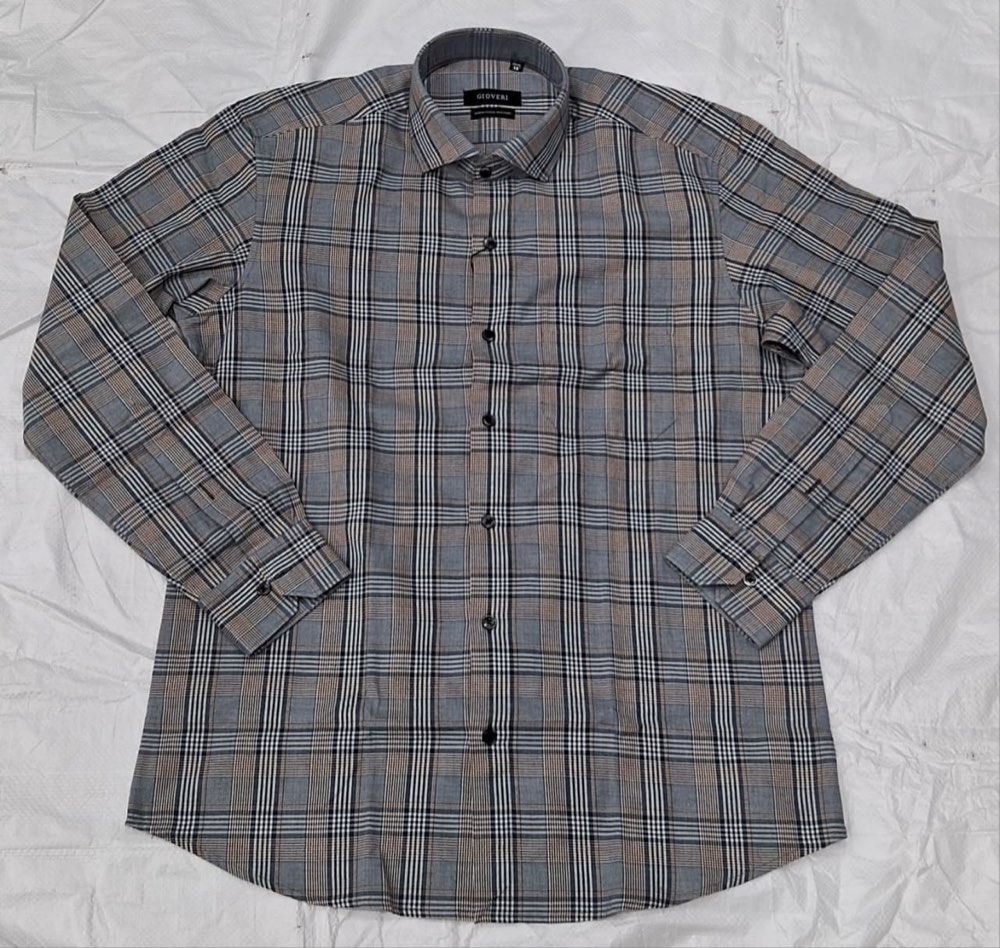
Grey and brown check long-sleeve shirt laid flat
№ 11 — Weave and yarn decide how a shirt feels

11 Cloth

Shirt Fabrics Explained

Two shirts can look identical on a hanger and feel completely different on the body. The difference is in the fibre, the yarn and the weave.

Most formal shirts are made from cotton or cotton blends. What changes their character is how the yarn is woven. Learn the main weaves and you can predict how a shirt will look, feel and wear before you put it on.

The main weaves

  • Poplin — a tight plain weave: smooth, crisp, light and formal.
  • Twill — a diagonal weave: soft, drapey and crease-resistant.
  • Oxford — a basket weave: textured, sturdy and relaxed.
  • Herringbone — a twill that reverses into a chevron for subtle texture.
  • Dobby and jacquard — small woven patterns that add depth to solids.
  • Linen and linen blends — airy, textured and naturally creased.

Reading a fabric in the hand

Rub it between your fingers for smoothness. Hold it to the light to judge weight and openness. Squeeze a corner to see how creases recover. These three checks tell you most of what you need to know.

Practical example

Choosing between two white shirts for a long travel day? Pick the twill over the poplin: it will arrive looking fresher, even if the poplin looks crisper on the hanger.

Styling recommendations

Smooth fabrics suit formal settings and ties; textured fabrics suit open collars and blazers. In warm weather, favour breathable cottons and linen blends; in air-conditioned offices, medium-weight twills are a comfortable compromise.

12 Occasion

Formal Shirts for Business Meetings

In a meeting you are seen mostly from the chest up, often for hours. The shirt carries more of your first impression than almost anything else you wear.

The aim is quiet authority: clothes that signal care and competence without drawing attention away from what you say. That means classic colours, a well-pressed collar and a fit that lets you sit, gesture and lean in comfortably.

What works

  • White, pale blue or a fine stripe — the safest and most respected choices.
  • A firm semi-spread or spread collar that stands up under a jacket.
  • Barrel or two-button cuffs; French cuffs for the most formal occasions.
  • A crease-resistant twill or quality poplin for long sessions.

Reading the room

For a first meeting with a new client, err on the formal side — you can always remove a tie. For an internal meeting in a relaxed office, a crisp button-down without a tie can feel more natural.

Practical example

For a morning pitch: a white spread-collar shirt, charcoal suit and navy tie. For an afternoon review with a familiar team: a blue fine-stripe shirt, navy trousers and a blazer, tie optional.

Styling recommendations

Press the collar and cuffs the evening before. Choose a shirt you've worn before and know fits well, rather than something new. And keep your watch and accessories simple so that attention stays on the conversation.

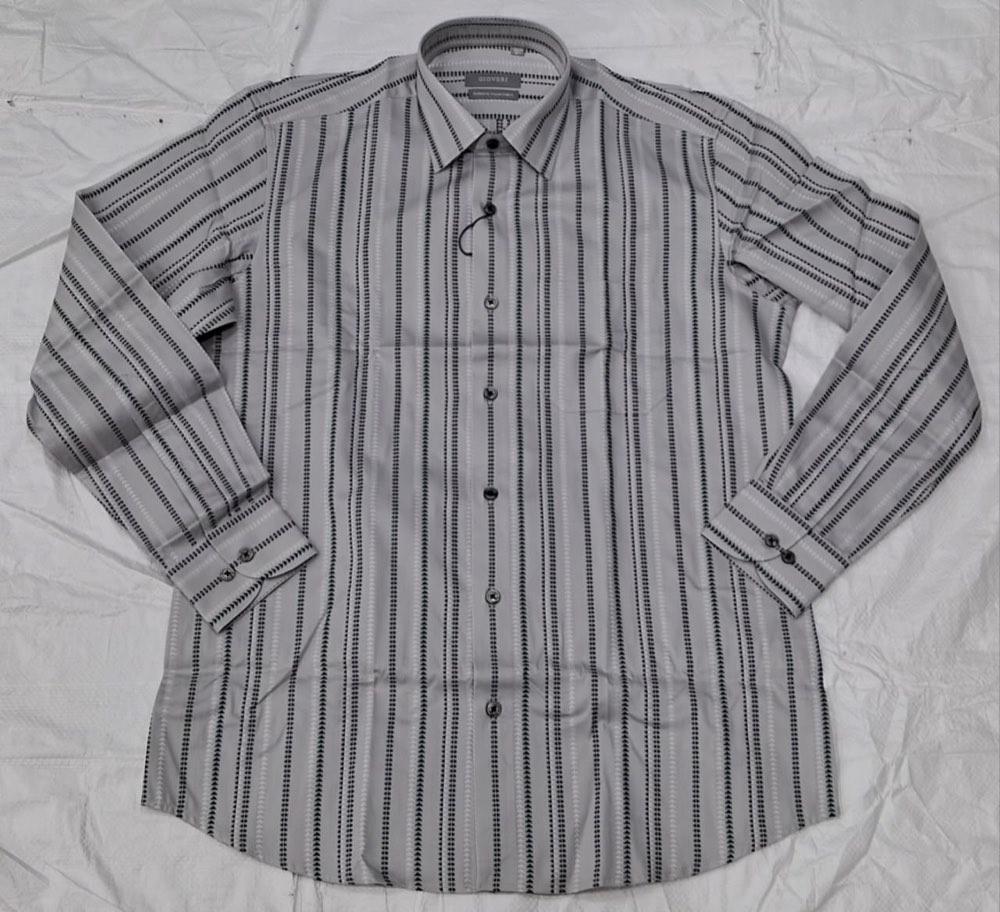
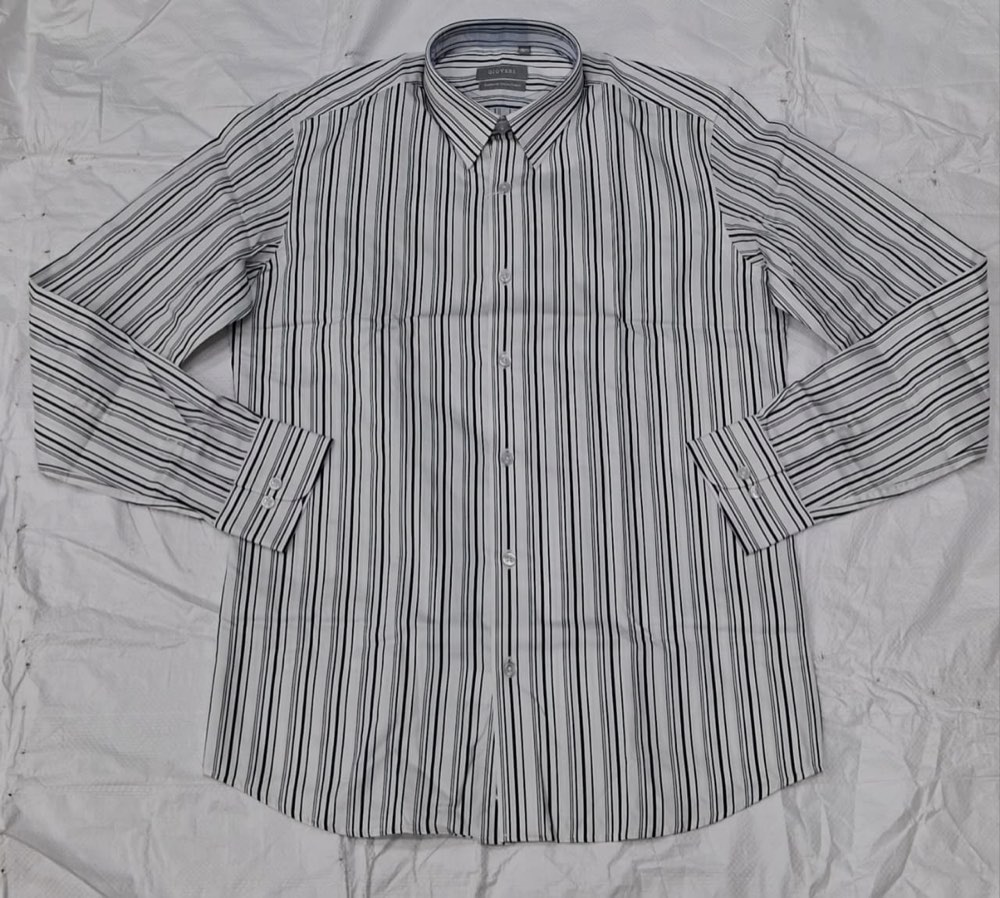
Grey and white striped long-sleeve formal shirt laid flat
№ 12 — Fine grey stripe: composed, not loud

Seen from the chest up, for hours — dress accordingly.

End of issue

Bring your questions to Options Mall.

Contact us