
Precisionbegins withproportion.
Fit matters more than fabric, colour or brand. A modest shirt that fits well will always look better than a remarkable one that doesn't. This guide shows where to look, what "right" looks like at each point, and how to test a shirt with your own body before you choose it.
Begin the twelve checkpoints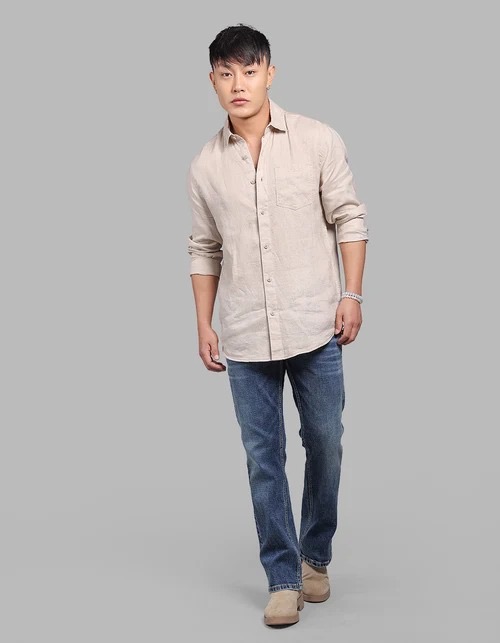
Twelve checkpoints, from collar to hem.
Work down the shirt in this order in front of a mirror. Each point lists what a good fit looks like and the warning signs that tell you to try another size or cut.
Shoulder seam placement
The seam where sleeve meets body sits right at the edge of your shoulder bone. This is the one point that is hardest to change, so judge it first.
Collar fit
Buttoned, the collar closes without squeezing; you can slide one finger — two at most — between collar and neck. The points sit flat on the chest.
Neck measurement
Measure around the base of the neck where a collar sits, with a finger under the tape. Shirt sizes are often based on this measurement, so it is your best starting point.
Chest room
Buttons lie flat when standing and when you fold your arms. You can pinch roughly a few centimetres of spare fabric at either side of the chest.
Waist shaping
The body follows your shape without clinging: smooth when tucked, with no parachute of fabric above the belt.
Sleeve length
With arms relaxed, the sleeve ends at the wrist bone, just where the hand begins. It should not ride up past the wrist when you reach forward.
Cuff positioning
The cuff closes snugly enough to stay in place on the wrist, with room for a watch. Under a jacket, about a centimetre of cuff should show.
Armhole construction
Higher, closer armholes give more freedom: you can raise your arms without the whole shirt lifting out of your trousers.
Shirt length
A formal shirt to be tucked should reach comfortably below the seat so it stays in when you sit and bend. Untucked shirts should end around mid-fly.
Tucked-in proportions
Once tucked, the shirt forms a clean line from collar to belt with only slight blousing at the sides — enough to move, never enough to sag.
Slim fit vs regular fit
Choose by build and comfort, not trend. Slim suits leaner frames and tailored suits; regular suits broader builds and long, active days.
Contemporary silhouettes
Modern cuts sit between slim and regular: a light taper, trimmer sleeve and slightly shorter length that works tucked or, for casual shirts, untucked.
Slim, regular, classic, contemporary.
Each drawing shows the shirt outline (solid) over the same body (dashed). The gap between them is ease — the room the cut allows. Naming varies between makers, so treat these as typical shapes and always try the shirt on.
-
Slim Fit
Close through chest and waist, with high armholes and narrow sleeves. Sharp and modern; best on leaner builds and under fitted tailoring.
- Chest
- Close
- Waist
- Strong taper
- Sleeve
- Narrow
-
Regular Fit
A straight line from chest to hem with comfortable ease everywhere. Easy to move in and forgiving on broader frames and long days.
- Chest
- Comfortable
- Waist
- Straight
- Sleeve
- Relaxed
-
Classic Fit
The most generous traditional cut: fuller chest, roomy armholes and a longer body. Prioritises comfort and a conventional, relaxed drape.
- Chest
- Generous
- Waist
- Full
- Sleeve
- Full
-
Contemporary Fit
Between slim and regular: shaped at the waist without closeness, with a trimmer sleeve. The most versatile modern silhouette.
- Chest
- Moderate
- Waist
- Gentle taper
- Sleeve
- Trim
Choose slim if…
you have a lean or athletic frame, wear fitted suits, and prefer a sharp, close line.
Choose regular if…
you have a broader build, value movement and airflow, or spend long days commuting and seated.
Reading fit on the body.
Practise on these three full-length photographs. Each shirt is worn casually and untucked, which makes the shoulder line, sleeve and length easy to read. Look first at the shoulders, then the sleeves, then where the hem falls.
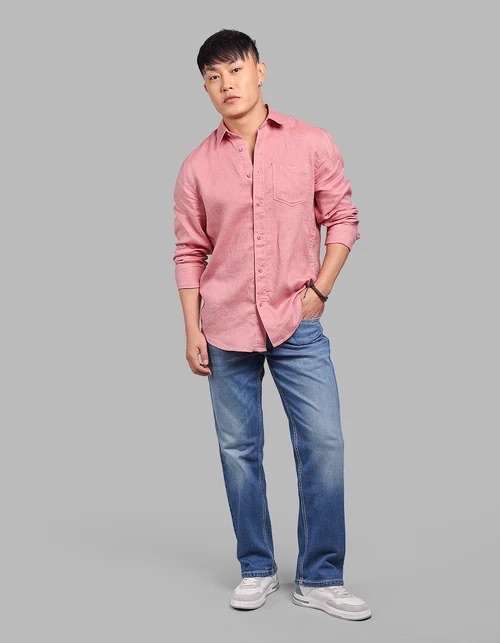
The rolled sleeve
The shoulder seam sits at the edge of the shoulder, and the sleeves are folded neatly just below the elbow — a relaxed but tidy way to wear a long-sleeve shirt. Untucked, the hem falls around the hip, right for casual wear.
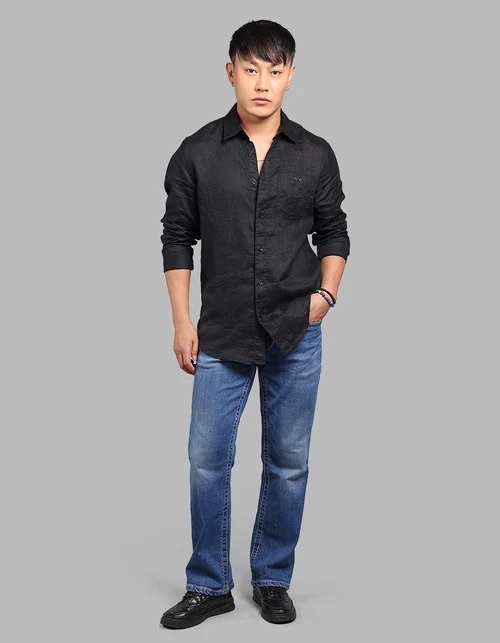
The dark solid
Dark colours hide body lines, so watch the outline instead: the chest sits clean with no pulling at the buttons, and the body falls straight without flaring. The collar open at the neck shows how a soft collar behaves without a tie.
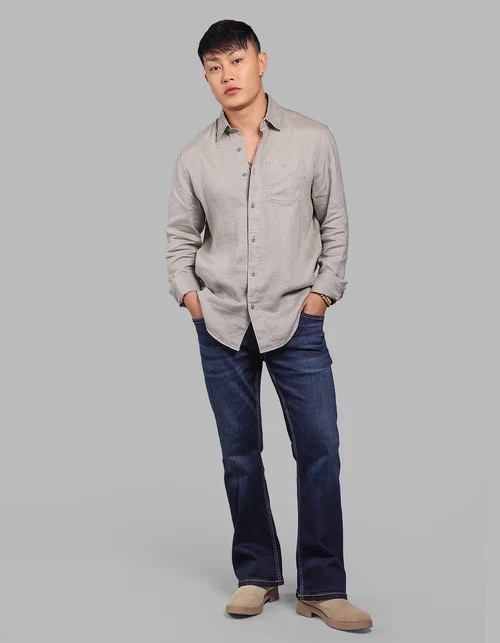
Hands in pockets
Movement reveals fit. With hands in pockets, look at how the shirt responds across the back and at the armholes — smooth fabric with no strain lines means the cut allows you to move. A light grey shows creasing, so fabric choice matters too.
The two-minute fitting-room test.
A shirt that fits standing still may not fit in motion. Before deciding, move the way you do on a working day.
Button it fully
Fasten every button including the collar. Check that the placket lies flat and the collar closes with a finger's room.
Reach forward
Extend both arms as if across a desk. The back should not strain and the cuffs should not retreat far up the forearm.
Raise your arms
Lift both arms overhead. A well-cut armhole keeps the shirt from pulling far out of the waistband.
Sit down
Sit as you would in a meeting. Buttons at the stomach should not gape and the tucked hem should stay in place.
Fold your arms
Watch the chest and shoulder blades. Tight pulling means the chest or back is too narrow for you.
Check the side view
Turn sideways to the mirror. Look for fabric ballooning at the back or stomach once tucked.
Imagine the jacket
If you'll wear it with a suit, consider whether the collar will stand above the lapel and the cuff show just beneath the sleeve.